
Hot Jupiter
WASP-126
A Jupiter-sized planet on a 3.3-day orbit: deep, easy transits, in the TESS southern continuous viewing zone.
8 dips (8 candidates)


SetuHQ searches any TESS star's public light curve for transits. A calibrated panel of Sentinels (AI reviewers) and Probes (deterministic detectors) marks the dips, and vetting explains every verdict. Nothing is called a planet until it is one.
"/%3E%3Ccircle cx="1104" cy="344" r="252" fill="url(#s)"/%3E%3Ccircle cx="1104" cy="489.0" r="3.8" fill="#030406" stroke="rgba(170,210,255,.5)" stroke-width="1"/%3E%3Cpath d="M96 655.2H784" stroke="rgba(255,255,255,.14)" stroke-width="2"/%3E%3Cpolyline points="96.0,655.2 99.4,655.2 102.9,655.2 106.3,655.2 109.8,655.2 113.2,655.2 116.6,655.2 120.1,655.2 123.5,655.2 127.0,655.2 130.4,655.2 133.8,655.2 137.3,655.2 140.7,655.2 144.2,655.2 147.6,655.2 151.0,655.2 154.5,655.2 157.9,655.2 161.4,655.2 164.8,655.2 168.2,655.2 171.7,655.2 175.1,655.2 178.6,655.2 182.0,655.2 185.4,655.2 188.9,655.2 192.3,655.2 195.8,655.2 199.2,655.2 202.6,655.2 206.1,655.2 209.5,655.2 213.0,655.2 216.4,655.2 219.8,655.2 223.3,655.2 226.7,655.2 230.2,655.2 233.6,655.2 237.0,655.2 240.5,655.2 243.9,655.2 247.4,655.2 250.8,655.2 254.2,655.2 257.7,655.2 261.1,659.3 264.6,686.4 268.0,710.1 271.4,714.2 274.9,717.3 278.3,719.9 281.8,722.0 285.2,723.9 288.6,725.5 292.1,727.0 295.5,728.3 299.0,729.6 302.4,730.7 305.8,731.7 309.3,732.7 312.7,733.6 316.2,734.4 319.6,735.2 323.0,735.9 326.5,736.6 329.9,737.2 333.4,737.8 336.8,738.4 340.2,738.9 343.7,739.4 347.1,739.9 350.6,740.3 354.0,740.8 357.4,741.1 360.9,741.5 364.3,741.9 367.8,742.2 371.2,742.5 374.6,742.8 378.1,743.0 381.5,743.3 385.0,743.5 388.4,743.7 391.8,743.9 395.3,744.1 398.7,744.3 402.2,744.4 405.6,744.6 409.0,744.7 412.5,744.8 415.9,744.9 419.4,745.0 422.8,745.0 426.2,745.1 429.7,745.1 433.1,745.2 436.6,745.2 440.0,745.2 443.4,745.2 446.9,745.2 450.3,745.1 453.8,745.1 457.2,745.0 460.6,745.0 464.1,744.9 467.5,744.8 471.0,744.7 474.4,744.6 477.8,744.4 481.3,744.3 484.7,744.1 488.2,743.9 491.6,743.7 495.0,743.5 498.5,743.3 501.9,743.0 505.4,742.8 508.8,742.5 512.2,742.2 515.7,741.9 519.1,741.5 522.6,741.1 526.0,740.8 529.4,740.3 532.9,739.9 536.3,739.4 539.8,738.9 543.2,738.4 546.6,737.8 550.1,737.2 553.5,736.6 557.0,735.9 560.4,735.2 563.8,734.4 567.3,733.6 570.7,732.7 574.2,731.7 577.6,730.7 581.0,729.6 584.5,728.3 587.9,727.0 591.4,725.5 594.8,723.9 598.2,722.0 601.7,719.9 605.1,717.3 608.6,714.2 612.0,710.1 615.4,686.4 618.9,659.3 622.3,655.2 625.8,655.2 629.2,655.2 632.6,655.2 636.1,655.2 639.5,655.2 643.0,655.2 646.4,655.2 649.8,655.2 653.3,655.2 656.7,655.2 660.2,655.2 663.6,655.2 667.0,655.2 670.5,655.2 673.9,655.2 677.4,655.2 680.8,655.2 684.2,655.2 687.7,655.2 691.1,655.2 694.6,655.2 698.0,655.2 701.4,655.2 704.9,655.2 708.3,655.2 711.8,655.2 715.2,655.2 718.6,655.2 722.1,655.2 725.5,655.2 729.0,655.2 732.4,655.2 735.8,655.2 739.3,655.2 742.7,655.2 746.2,655.2 749.6,655.2 753.0,655.2 756.5,655.2 759.9,655.2 763.4,655.2 766.8,655.2 770.2,655.2 773.7,655.2 777.1,655.2 780.6,655.2 784.0,655.2" fill="none" stroke="#FFB340" stroke-width="3.2"/%3E%3Ctext x="96" y="643" fill="#9AA3B5" font-family="sans-serif" font-size="20" data-i18n="hero.depth" data-i18n-args='%7B"d":245%7D'%3Edepth 245 ppm (model)%3C/text%3E%3C/svg%3E)
Each is a stored run on public TESS light curves from MAST, with its data, configuration and code hashed. Every dip is counted by its vetting outcome; a candidate stays unconfirmed, and a rejected dip is not a candidate.
Hot Jupiter
A Jupiter-sized planet on a 3.3-day orbit: deep, easy transits, in the TESS southern continuous viewing zone.
8 dips (8 candidates)
Multi-planet system
An M dwarf with three known transiting planets at 3.4, 5.7 and 11.4 days: several periods in one star.
7 dips (5 candidates, 2 flagged)
Found all 5 of c's transits and both of d's; b not found; d seen twice, no period (one transit per 13-day piece of the light curve).
Small planets near the limit
A bright K dwarf with two small known planets: b (about 1.6 Earth radii, 4.8 days, roughly 350 ppm deep) and c (17.2 days).
3 dips (2 candidates, 1 flagged)
Found 1 of b's 5 transits and both of c's; neither published period was recovered (the BLS period on those dips is not the planet's).
Known false positive
A TESS Object of Interest the TOI table dispositions as a false positive (FP): a 2.4% dip every 4.5 days.
6 dips (6 rejected)
Reference check
A sun-like star with a super-Earth on a 6.3-day orbit: the run checked in full against Huang et al. 2018.
7 dips (5 candidates, 1 flagged, 1 rejected)
Each stage: the star's disc in its blackbody colour at the Teff its run stores, and what the run measured as a shadow at its fitted Rp/R★ (a planet the run missed is a dashed outline). Sizes are to scale against the disc; where each sits on it is illustrative. No candidate is given planet art. Stages: docs/results/showcase.json; each run's stellar.json (TESS Input Catalog v8.2).
The example stars' colours
Star colour: a Planck spectrum through the CIE 1931 colour-matching functions, in sRGB, normalised to its brightest channel (a hue, not a brightness). Teff: each run's stellar.json (TESS Input Catalog v8.2, MAST); the Sun 5,772 K (IAU 2015 nominal). How the pictures are drawn ›
Planets to scale
 Earth1.00 R⊕
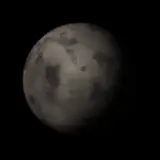 TOI-270 b1.25 R⊕
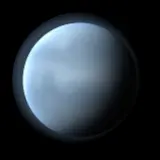 HD 15337 b1.77 R⊕
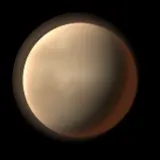 pi Men c1.87 R⊕TOI-270 d2.13 R⊕TOI-270 c2.33 R⊕HD 15337 c2.53 R⊕
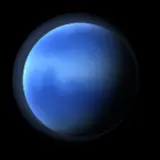 Neptune3.88 R⊕
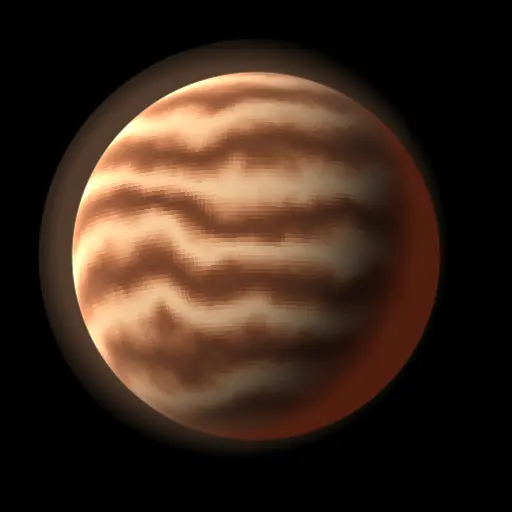 WASP-126 b0.96 RJ
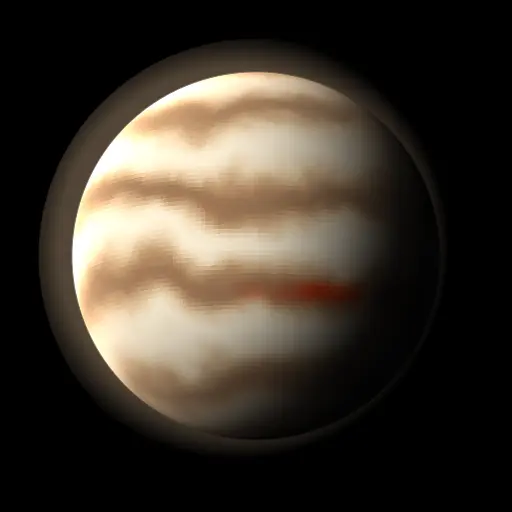 Jupiter1.00 RJ
Real data
The panel
5 of 5 marked it · panel score 1.00, as storedcandidate, unconfirmed
Sentinels run on Claude (Anthropic) by default; other providers are supported and labelled. Probes are deterministic matched-filter detectors.
The sky
8,376 planets shown · transit 4,958 · radial velocity 1,370 · imaging 1,269 · microlensing 386
Each dot is a catalogued planet at its host star's position (RA and Dec, J2000), coloured by the method that found it, appearing in its discovery year. This still shows 100 of them (every 84th); the full map draws when the page's script runs. SetuHQ did not discover these planets. Source: The Extrasolar Planets Encyclopaedia (exoplanet.eu), fetched 2026-10-18.
Point at a year, or focus the chart and use the arrow keys.
Planets per discovery year, stacked by the method that found them. SetuHQ did not discover these planets. Source: The Extrasolar Planets Encyclopaedia (exoplanet.eu), fetched 2026-10-18.
Every number links to its proof
We have searched 200 stars for anything that dims; nothing yet stands out above chance. See the evidence ›
18 steps, from how a survey works to every known exoplanet. Optional: go in order or skip around; any page you open counts. Progress stays in this browser.
0 of 18 visited
The interactive parts of this page could not load. Its text above is complete; reload to try again.